
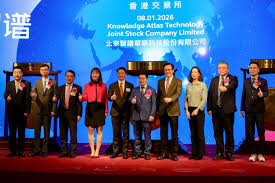
Hong Kong: A Milestone in China’s AI Ambitions
In the early days of 2026, the global AI landscape witnessed a pivotal moment as Zhipu AI, one of China’s leading artificial intelligence startups, made its debut on the Hong Kong Stock Exchange. This historic initial public offering (IPO) not only marked the first major listing for a Chinese large language model (LLM) developer but also catapulted its chairman, Liu Debing, into the ranks of the world’s billionaires. Founded amid the rapid evolution of generative AI technologies, Zhipu AI has positioned itself as a formidable challenger to Western giants like OpenAI and Anthropic. The IPO, which raised $558 million, underscores Beijing’s aggressive push to foster domestic AI innovation amid escalating U.S.-China tech tensions.
The event unfolded on January 8, 2026, with shares of Knowledge Atlas Technology JSC—Zhipu AI’s formal name—opening at a modest premium before climbing steadily throughout the day. This listing comes at a time when Hong Kong is reestablishing itself as a hub for high-growth tech firms, especially those from mainland China seeking international capital without fully exposing themselves to U.S. regulatory scrutiny. For investors Hong Kong, it represented a rare opportunity to bet on China’s “AI tigers”—a group of startups racing to build advanced LLMs capable of rivaling global leaders.
Zhipu AI’s journey from a Tsinghua University spin-off to a publicly traded entity valued at over $6.6 billion reflects broader trends in the AI sector: heavy investment in research, strategic partnerships with tech behemoths, and navigation through geopolitical hurdles like U.S. export controls. As we delve deeper, this article explores Liu Debing’s rise, the company’s technological prowess, the IPO’s intricacies, market reactions, and what lies ahead for this new powerhouse in the AI arena.
The Man Behind the Billion: Who Is Liu Debing?
Early Life and Career Path
Liu Debing, now 49, emerges as the quintessential figure in China’s AI boom—a blend of academic rigor and entrepreneurial grit. Born in China, Liu’s educational foundation was laidHong Kong at Beijing Jiaotong University, where he honed his skills in engineering and computing. His professional trajectory began in the trenches of the tech industry, working as an engineer at Technicolor (China) Technology, a firm specializing in digital media solutions. This role exposed him to the intricacies of computing infrastructure, setting the stage for his later innovations in AI.
For nearly two decades, Liu was affiliated with Tsinghua University, President Xi Jinping’s alma mater and one of China’s premier institutions for technological research. There, he delved into Hong Kong advanced computing projects, collaborating with Hong Kong professors and researchers who would later become his co-founders. This period was crucial, as it immersed him in the academic ecosystem that birthed Zhipu AI. Liu’s expertise in knowledge graphs and large-scale data processing became foundational to the company’s AI models.
Role in Founding Zhipu AI
Liu Debing played a pivotal role in the founding and early development of Zhipu AI (officially Beijing Zhipu Huazhang Technology Co., Ltd., later rebranded internationally as Z.ai), one of China’s leading artificial intelligence companies and a prominent member of the country’s “AI tigers.” Established in 2019 as a spin-off from Tsinghua University‘s Department of Computer Science, Zhipu AI emerged from academic roots focused on knowledge graphs, large-scale data processing, and pre-trained language models. While the academic founders—Professors Tang Jie and Li Juanzi—provided the core scientific vision and technological foundation, Liu Debing brought industry experience, strategic leadership, and operational Hong Kong expertise that helped transform the university project into a commercial powerhouse.
As co-founder and chairman, Liu Debing has been instrumental in bridging academia and industry, securing funding, navigating regulatory landscapes, and steering the company’s long-term direction toward building general-purpose large language models (LLMs) capable of rivaling global leaders like OpenAI.
Academic Origins: The Tsinghua Spark
Zhipu AI’s story begins at Tsinghua University, one of China’s premier institutions for AI research. In 2019, Professors Tang Jie and Li Juanzi—Hong Kong both renowned experts in knowledge engineering and natural language processing—spun out their research from the university’s Knowledge Engineering Group (KEG). Their initial focus was on knowledge graphs and academic AI applications, building on breakthroughs like the WuDao series of models developed in collaboration with the Beijing Academy of Artificial Intelligence.
This academic foundation laid the groundwork for Zhipu AI’s flagship GLM (General Language Model) series, emphasizing bilingual Hong Kong (Chinese-English) capabilities, autoregressive blank infilling, and knowledge-driven reasoning. However, turning cutting-edge research into a scalable startup required more than scientific brilliance—it demanded business acumen, capital, and operational scale.
Here are glimpses of Tsinghua University’s innovative AI labs and computer science facilities, where Zhipu AI’s journey began:
Liu Debing’s Entry: From Industry Veteran to Co-Founder
Liu Debing, born around 1976–1977 (age 49 at the time of Zhipu’s 2026 IPO), entered the founding team with a strong background in computing technology. Before Zhipu, he worked as an engineer at Technicolor (China) Technology,Hong Kong gaining hands-on experience in digital media and large-scale computing systems. He then spent nearly two decades affiliated with Tsinghua University, collaborating on advanced computing projects and building deep ties within the institution’s ecosystem.
Liu co-founded Zhipu AI in 2019 alongside CEO Zhang Peng (a Tsinghua alumnus and AI researcher), Tang Jie, and Li Juanzi. While Tang and Li Juanzi drove the scientific innovation, Liu Debing focused on the entrepreneurial and strategic aspects:
- Corporate structure and governance: He helped establish the company as an independent entity spun out from Tsinghua.
- Funding and partnerships: Liu was key in attracting early backers, including tech giants like Alibaba, Tencent, Ant Group, Meituan, and Xiaomi, as well as venture firms such as HongShan (formerly Sequoia China), Qiming Venture Partners, and state-backed funds.
- Strategic vision: As chairman, he emphasized building resilient technologies amid geopolitical challenges, such as U.S. export controls, by prioritizing domestic hardware partnerships Hong Kong (e.g., Cambricon and Moore Threads).
By the company’s IPO in January 2026, Liu and Tang Jie together controlled significant voting rights (around 37%), ensuring founder-led direction even as the company scaled to over 800 employees.
Iconic portraits and moments featuring Liu Debing as chairman of Zhipu AI:

Collaborative Founding Team Dynamics
Zhipu AI’s founding was a true team effort blending academia and industry:
- Tang Jie — Chief scientific architect, professor at Tsinghua, IEEE/ACM/AAAI Fellow, and director of the Foundation Model Research Center. He remains a guiding force in innovation.
- Li Juanzi — Co-founder and professor, instrumental in early knowledge graph research.
- Zhang Peng — CEO, operational leader who joined from Tsinghua research and has driven commercial growth.
- Liu Debing — Chairman and co-founder, providing the bridge from research to enterprise-scale AI.
This structure allowed Zhipu to pivot quickly after the 2022 ChatGPT boom, launching early GLM models and expanding into multimodal capabilities.
In 2019, Liu co-founded Zhipu AI Hong Kong (originally Beijing Zhipu Huang Technology Co., Ltd.) alongside CEO Zhang Peng and Tsinghua professors Tang Jie and Li Juanita. As chairman, Liu has been instrumental in steering the company’s strategic direction, particularly in securing funding and navigating regulatory landscapes. Together with Tang Jie, Liu holds significant voting rights—approximately 37%—ensuring tight control over the firm’s decisions.
Liu’s vision for Zhipu was rooted in creating AI that could “think like humans,” Hong Kong leveraging knowledge graphs and multimodal models. Under his leadership, the company grew from a small Tsinghua lab project focused on academic AI research to a workforce of over 800 employees by 2024, making it China’s largest AI Hong Kong startup by headcount. His background in engineering has been pivotal in developing resilient technologies that bypass Hong Kong U.S. restrictions, such as using domestic chips from Cambricon Technologies and Moore Threads.
Becoming a Billionaire Overnight
The IPO minted Liu as a new billionaire,Hong Kong with Forbes estimating his net worth at $2.1 billion based on his stake in the company. This wealth surge places him among a growing cadre of AI tycoons, akin to OpenAI’s Sam Altman or Anthropic’s Dario Amodei, though in a distinctly Chinese context. Liu’s ascent highlights how AI IPOs are creating instant fortunes, fueled by investor enthusiasm for generative technologies.
Despite his newfound status, Liu remains low-profile, focusing on Zhipu’s global expansion. In speeches at the listing ceremony, he emphasized the company’s role in representing China’s large model sector on the world stage. His story is one of perseverance, from university halls to the stock exchange floor, embodying the fusion of academia and commerce driving China’s tech renaissance.
In the fast-paced world of artificial intelligence, where valuations soar and innovations reshape industries, Zhipu AI has emerged as a trailblazer. On January 8, 2026, the Beijing-based company made history by becoming the world’s first publicly traded firm focused on large language models (LLMs) and artificial general intelligence (AGI). This landmark Hong Kong IPO not only raised $558 million but also minted a new billionaire in the AI space. As China pushes to challenge U.S. dominance in AI, Zhipu AI’s debut signals a new era for global tech investors. Let’s dive into the story behind this groundbreaking event.

The Rise of Zhipu AI: A Tsinghua-Born Powerhouse
Zhipu AI, officially known as Knowledge Atlas Technology JSC, traces its origins to Tsinghua University, often dubbed China’s MIT. Founded in 2019, the company spun out from the university’s Department of Computer Science, where professors Tang Jie and Li Juanzi initially focused on knowledge graphs and academic AI research. However, Hong Kong the real momentum came under the leadership of cofounders Liu Debing (Chairman) and Zhang Peng (CEO), who pivoted the firm toward developing advanced LLMs amid the global AI boom sparked by ChatGPT.
Backed by heavyweights like Alibaba, Tencent, Hillhouse Capital, Qiming Venture Partners, and various Chinese government funds, Zhipu AI quickly ascended to become one of China’s “AI tigers”—a group of elite startups including MiniMax, Moonshot AI, and Baichuan AI. These firms are Beijing’s answer to OpenAI and Anthropic, emphasizing sovereign AI capabilities amid U.S.-China tech tensions. By 2025, Zhipu had raised over $1.5 billion in funding, Hong Kong achieving unicorn status with valuations climbing to $3 billion and beyond.
The company’s ethos blends academic rigor with ambitious goals. As Zhang Peng has noted in interviews, Zhipu AI’s internal mantra is: “No matter how much money we raise or how much money we make, it will be a hindrance on our road to AGI.” This focus on long-term innovation has positioned Zhipu as a key player in China’s AI ecosystem, Hong Kong even earning it a spot on the U.S. Department of Commerce’s Entity List in early 2025 due to national security concerns.
For more on China’s AI landscape, check out our in-depth guide to China’s AI Tigers and Their Global Impact.
Meet the New Billionaire: Liu Debing’s Path to AI Fortune
At the center of Zhipu AI’s success is Liu Debing, the 49-year-old chairman who cofounded the company with CEO Zhang Peng. Following the IPO, Liu’s stake in Zhipu catapulted him into billionaire status, with Forbes estimating his net worth at $2.1 billion. A veteran in computing technology, Liu spent nearly two decades as an engineer at firms like Technicolor (China) Technology before joining Tsinghua University, where he honed his expertise in AI and data science.
Liu’s journey mirrors the entrepreneurial spirit driving China’s tech sector. Unlike flashy Silicon Valley founders, Liu embodies a low-key, technically driven approach. He holds significant control alongside Tang Jie, one of the original academic founders. Zhang Peng Hong Kong, the CEO, complements this with his Tsinghua PhD in computer science and prior role as deputy director of the university’s Science and Technology Big Data Research Center.
This duo’s vision has attracted top talent and investors Hong Kong, turning Zhipu into a $7.4 billion powerhouse. Liu’s billionaire status underscores how AI is creating wealth in Asia, even as economic challenges loom.

Peng Zhang | 2024 Machine Learning Summit
Inside the Historic Hong Kong IPO: Numbers and Market Buzz
Zhipu AI’s IPO on the Hong Kong Stock Exchange (HKEX) was a watershed moment. The company offered 37.4 million shares at HK$116.20 each, raising HK$4.35 billion ($558 million) and valuing the firm at around HK$51 billion ($6.6 billion) pre-debut. On listing day, shares opened at HK$120 and surged to HK$131.50, closing up 13.1%—a solid performance amid concerns over an AI bubble.
This debut made Zhipu the first of China’s AI tigers to go public, outpacing U.S. rivals like OpenAI, which remains private with a staggering $500 billion valuation. MiniMax followed suit with its own IPO a day later, raising the bar for Hong Kong’s tech listings in 2026. The timing aligns with Beijing’s push for domestic AI and chip advancements, Hong Kong fast-tracking listings to counter U.S. tech restrictions.
Investor appetite was strong, with cornerstone backers including Alibaba and Tencent committing early. Retail allocation was 10%, reflecting broad interest. However, challenges persist: Zhipu reported losses of $334 million on $27 million revenue in the first half of 2025, highlighting the high costs of AI development.

Zhipu AI’s Cutting-Edge Tech: GLM Models and Beyond
What sets Zhipu AI apart is its technological prowess. The company’s flagship GLM (General Language Model) series has consistently pushed boundaries. In 2025, GLM-4.7 scored 84.9% on LiveCodeBench, rivaling Claude Sonnet 4.5, with superior tool-calling and coding capabilities. Zhipu offers affordable API access starting at $3/month—far below competitors’ $200+ fees—making it accessible for developers worldwide.
The firm operates Z.ai, a ChatGPT-like service with 25 million users, primarily in mainland China but expanding to Malaysia, Singapore, Hong Kong and the U.S. Zhipu’s open-source ethos shines through releases like GLM-4-9B and GLM-4.5, fostering global collaboration. Its billion-scale knowledge graphs combined with multimodal models aim at AGI, positioning Zhipu as a leader in agentic AI and long-horizon tasks..

Challenges Ahead: Navigating Geopolitics and Profitability
Zhipu’s path isn’t without hurdles. The U.S. Entity List restricts exports, forcing reliance on Chinese alternatives like Huawei’s Ascend chips. Globally, AI hype risks a bubble, as seen in Zhipu’s negative margins on services like GLM Coding Plan. Competition from fellow AI tigers and U.S. giants intensifies, with MiniMax’s $14 billion valuation post-IPO adding pressure.
Yet, optimism abounds. Zhipu plans to allocate IPO proceeds to R&D, talent acquisition, and infrastructure. Analysts predict 2026 as a pivotal year for AI monetization, shifting from models to applications. With nearly 90% of customers in China, expansion into Southeast Asia and beyond could drive growth.
For insights on AI challenges, read our piece on Geopolitical Risks in Global AI.
Conclusion: A New Chapter in AI’s Global Saga
Zhipu AI’s 2026 Hong Kong IPO isn’t just a financial milestone—it’s a statement of China’s AI ambitions. By minting Liu Debing as a new billionaire and becoming the first LLM firm to go public, Zhipu sets a benchmark for the industry. As AGI edges closer, this Tsinghua-born startup could redefine how we interact with technology.
Lasting Impact of Liu Debing’s Role
Liu Debing’s contributions as co-founder and chairman of Zhipu AI have left an indelible mark not only on the company itself but on the broader trajectory of China’s artificial intelligence industry. From 2019, when Zhipu was merely a research spin-off from Tsinghua University, to its landmark Hong Kong IPO in January 2026, Liu has been the steady hand guiding the transition from academic laboratory to global-scale AI enterprise. His lasting impact can be measured across several dimensions: institutional resilience, technological self-reliance, capital formation, leadership philosophy, and geopolitical positioning.
Institutional Resilience and Founder-Led Governance
One of Liu Debing’s most enduring legacies is the governance model he helped architect. By securing approximately 37% combined voting control alongside co-founder Professor Tang Jie, Liu ensured that Zhipu would remain founder-driven even after raising billions in venture capital and going public. This structure—common in Western tech giants like Meta and Alphabet but rarer among Chinese AI startups—has allowed Zhipu to maintain long-term strategic consistency amid rapid industry cycles.
During the intense funding winter of 2022–2023 and the subsequent U.S. Entity List designation in January 2025, many Chinese AI firms faced pressure to pivot toward short-term profitability or accept heavy state influence. Zhipu, under Liu’s chairmanship, resisted both extremes. The company continued aggressive R&D spending (losses reached $343 million in the first half of 2025 alone) while preserving independence from any single dominant shareholder. This resilience has become a model for other “AI tigers” seeking to balance commercial scale with scientific ambition.
Driving Technological Self-Reliance
Perhaps Liu Debing’s most consequential contribution has been his early and unwavering emphasis on building a technology stack independent of restricted U.S. components. When the U.S. Department of Commerce added Zhipu to the Entity List in early 2025—restricting access to advanced NVIDIA GPUs and other critical hardware—many observers predicted severe setbacks. Instead, Zhipu accelerated partnerships with domestic chipmakers Cambricon Technologies, Moore Threads, and Hygon, while optimizing model architectures for lower-precision training and inference.
Liu personally championed these strategic shifts, arguing in internal strategy sessions that “sovereign capability is the only sustainable path for Chinese large models.” The result was GLM-4 series models that, by late 2025, achieved near-parity with leading Western counterparts on many Chinese-language benchmarks while running efficiently on domestically produced hardware. Industry analysts now credit Liu’s foresight with helping China close the hardware gap years faster than anticipated, giving domestic developers a credible alternative ecosystem.
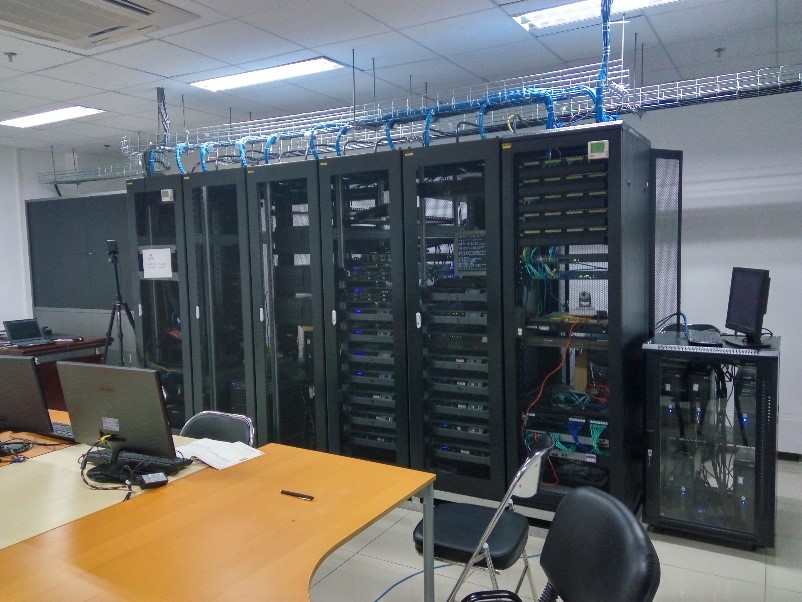
Here are powerful visuals of Zhipu AI’s domestic hardware integration labs and high-performance computing clusters that embody this self-reliance push:
Architect of Massive Capital Formation
Liu Debing played the central role in raising over $2.2 billion across multiple funding rounds between 2019 and 2025—Hong Kong the largest cumulative amount ever secured by a Chinese LLM developer at the time of its IPO. He personally led negotiations with cornerstone investors including Alibaba, Tencent, Ant Group, Meituan, Xiaomi, Hillhouse Capital, HongShan, Qiming Venture Partners, Lightspeed China, and even Prosperity7 Ventures (Saudi Aramco’s VC arm).
His ability to attract both private-sector tech giants and state-backed funds without ceding operational control created a rare “full-spectrum” investor base that provided not only capital but also strategic resources: cloud infrastructure from Alibaba and Tencent, distribution channels through Meituan and Xiaomi, and policy alignment via government-linked entities. This diversified funding approach became a blueprint followed by competitors like MiniMax, Moonshot AI, and 01.AI in subsequent years.
The January 8, 2026 Hong Kong IPO itself—Hong Kong raising $558 million at a $6.6 billion valuation—was the culmination of Liu’s decade-long capital strategy. Shares closed up 13.1% on debut day, signaling strong market confidence in the governance and technology direction Liu had championed.
Shaping a Distinct Chinese Leadership Philosophy in AI
Liu Debing has also helped define a uniquely Chinese leadership archetype in the global AI race: the academically rooted, industry-seasoned, Hong Kong geopolitically astute founder-executive. Unlike the pure researcher archetype (Tang Jie) or the pure operator (Zhang Peng), Liu combines deep technical understanding with pragmatic business instincts and a keen awareness of international constraints.
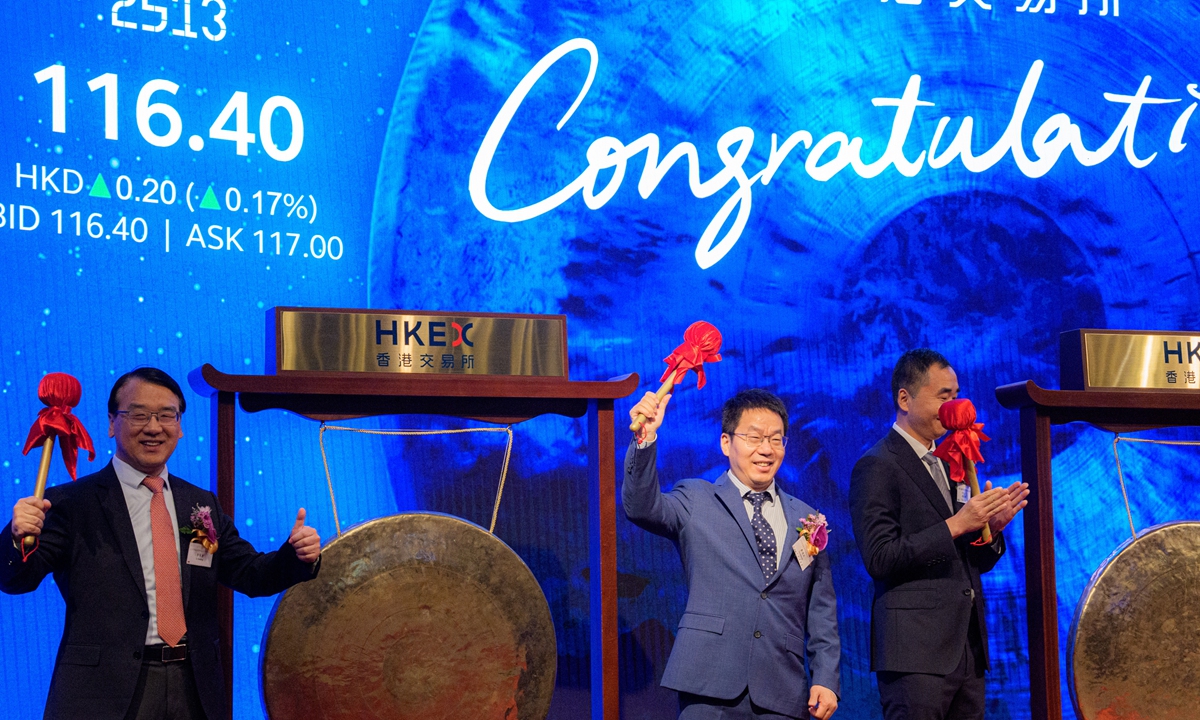
In public statements, particularly during the IPO roadshow and bell-ringing ceremony, Liu repeatedly framed Zhipu’s mission as “representing China’s large model sector on the world stage.” This messaging resonated both domestically—where it aligned with national self-reliance goals—and internationally, where investors increasingly view Chinese AI firms as credible long-term challengers rather than mere copycats.
His low-profile personal style further reinforces this philosophy: despite becoming a billionaire overnight (Forbes estimated his net worth at $2.1 billion post-IPO), Liu has avoided the spotlight common among many Western tech founders, choosing instead to let the company’s technology and results speak.
Here are candid behind-the-scenes moments from the Hong Kong Stock Exchange listing ceremony, capturing Liu Debing’s understated yet commanding presence:
Geopolitical Positioning and Long-Term Legacy
Liu Debing’s decisions have positioned Zhipu AI as one of the few Chinese AI companies with genuine global expansion potential. By establishing offices in the UK, Singapore, Malaysia, and the Middle East, and forging “sovereign AI partnerships” along the Belt and Road Initiative, Zhipu is exporting Chinese large models to emerging markets while carefully navigating Western regulatory scrutiny.
Critics argue that Liu’s strategy of heavy reliance on domestic hardware and state-aligned investors limits ultimate technological ceilings. Supporters counter that his approach has already proven more sustainable than the GPU-dependent paths taken by some Western competitors facing their own supply-chain vulnerabilities.
Whatever the long-term verdict, Liu Debing’s role has already reshaped the competitive landscape: he helped create the first Chinese LLM developer to achieve a major international public listing, demonstrated that academic spin-offs can scale to multi-billion-dollar valuations, and proved that Chinese AI firms can thrive under intense external pressure.
As Zhipu continues its pursuit of general artificial intelligence, Liu Debing’s foundational choices—governance independence, hardware sovereignty, diversified capital, and measured global ambition—will likely influence Chinese AI development for decades to come.